Project Type:
Museum Archive Extension
Location:
Penn Museum, Philadelphia, PA, USA
Recognitions & Publications:
Published in Pressing Matters 10 (2022)
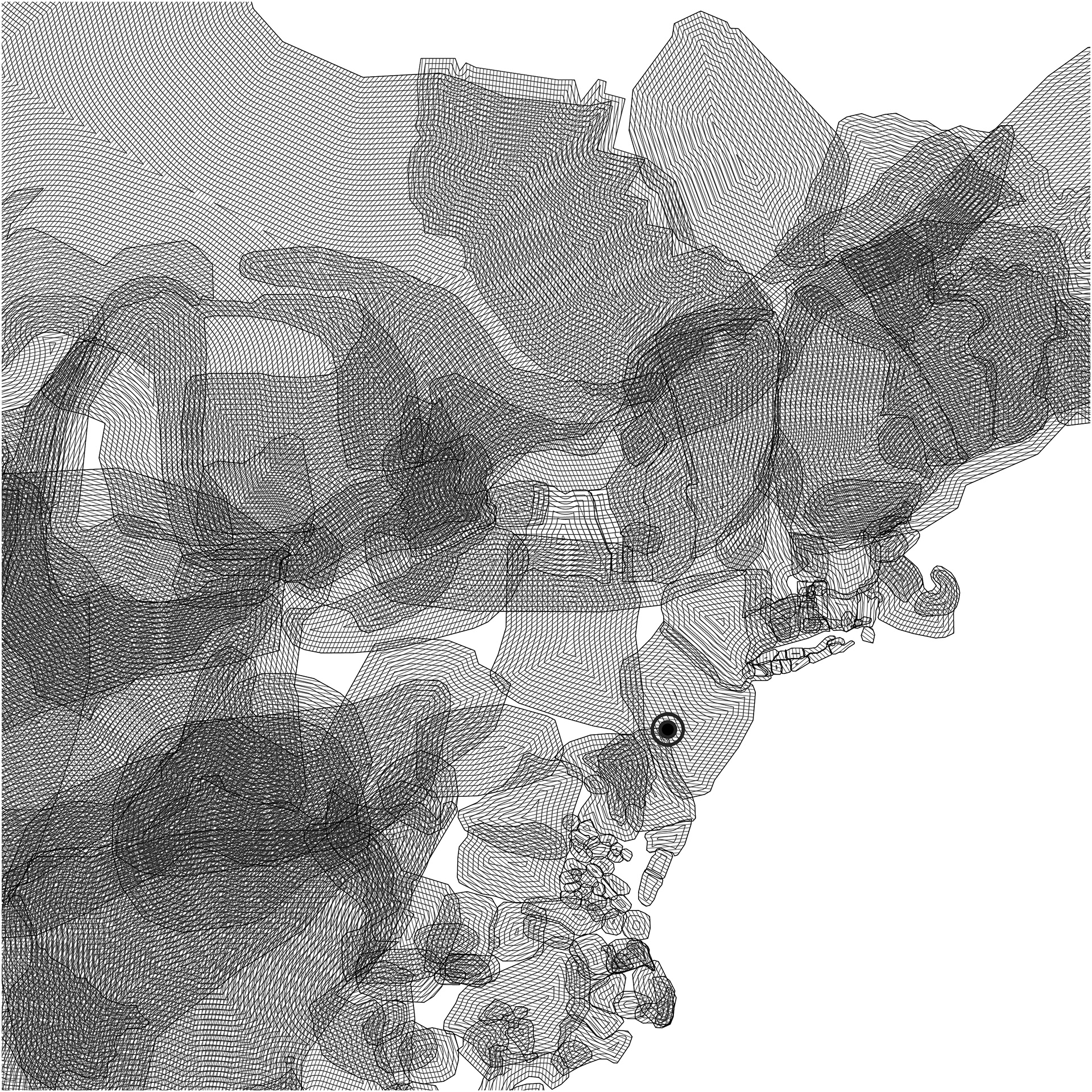
Indigenous Territories Map
Unlike today’s distinct boundaries between different states, those indigenous territories did not have hard edges and clear distinctions but overlapped each other. This project aims to translate and reproduce the wonderful moment of overlap in different scales and elements throughout the building.
The project replaces existing guardrails with multiple entries on different levels, making the building a true cultural facility to invite everyone to walk in. Spaces and artifacts that have been sealed for a long time now get the chance to re-expose to the public.
This project aims to slowly return the artifacts to their original groups without showing the real ones and provides people with multi-dimensions of cultural experience. It is also a reminder to people that our beautiful society today is the result of the non-stoping overlapping of cultures, with their original spirits inheriting.
The project replaces existing guardrails with multiple entries on different levels, making the building a true cultural facility to invite everyone to walk in. Spaces and artifacts that have been sealed for a long time now get the chance to re-expose to the public.
This project aims to slowly return the artifacts to their original groups without showing the real ones and provides people with multi-dimensions of cultural experience. It is also a reminder to people that our beautiful society today is the result of the non-stoping overlapping of cultures, with their original spirits inheriting.
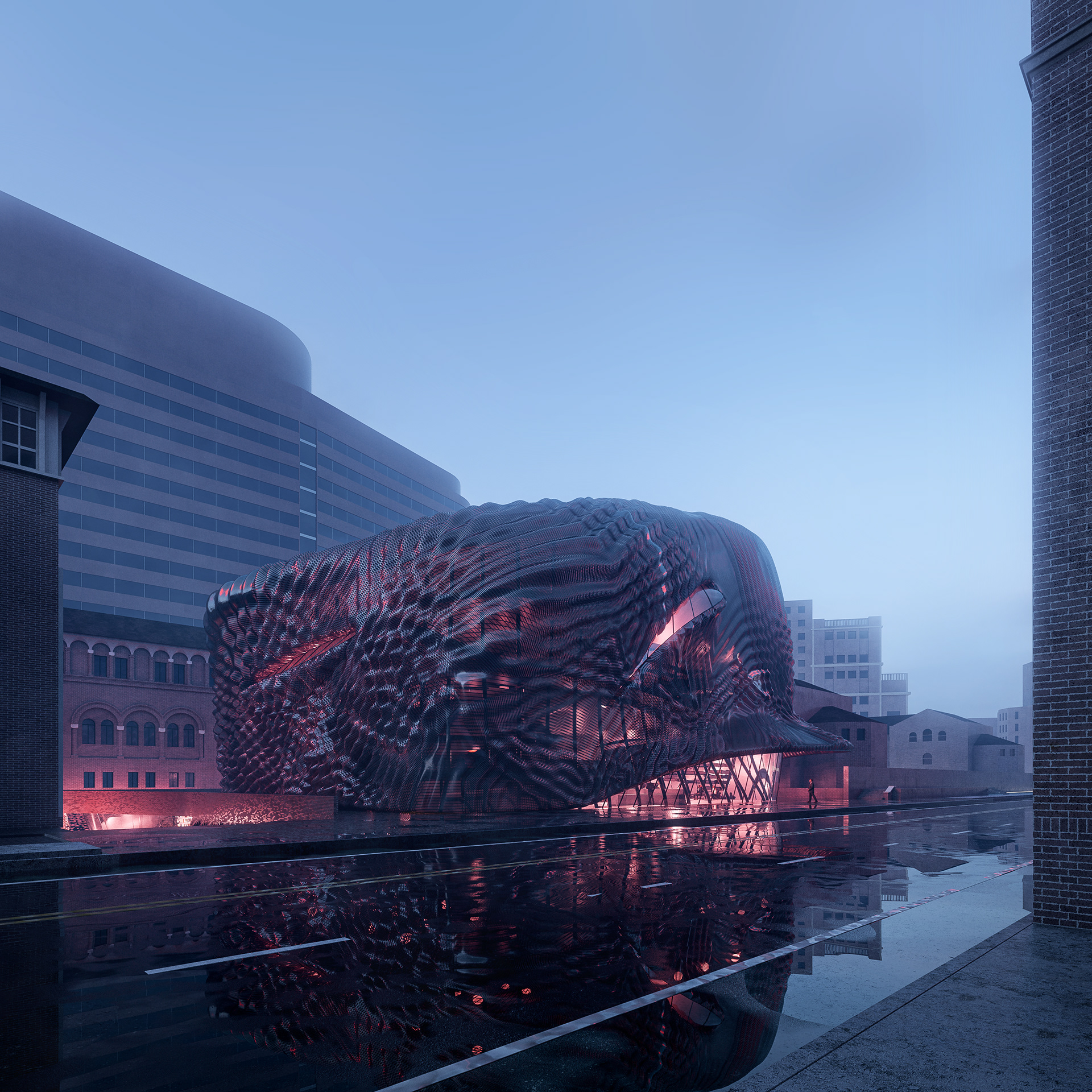
STREET VIEW
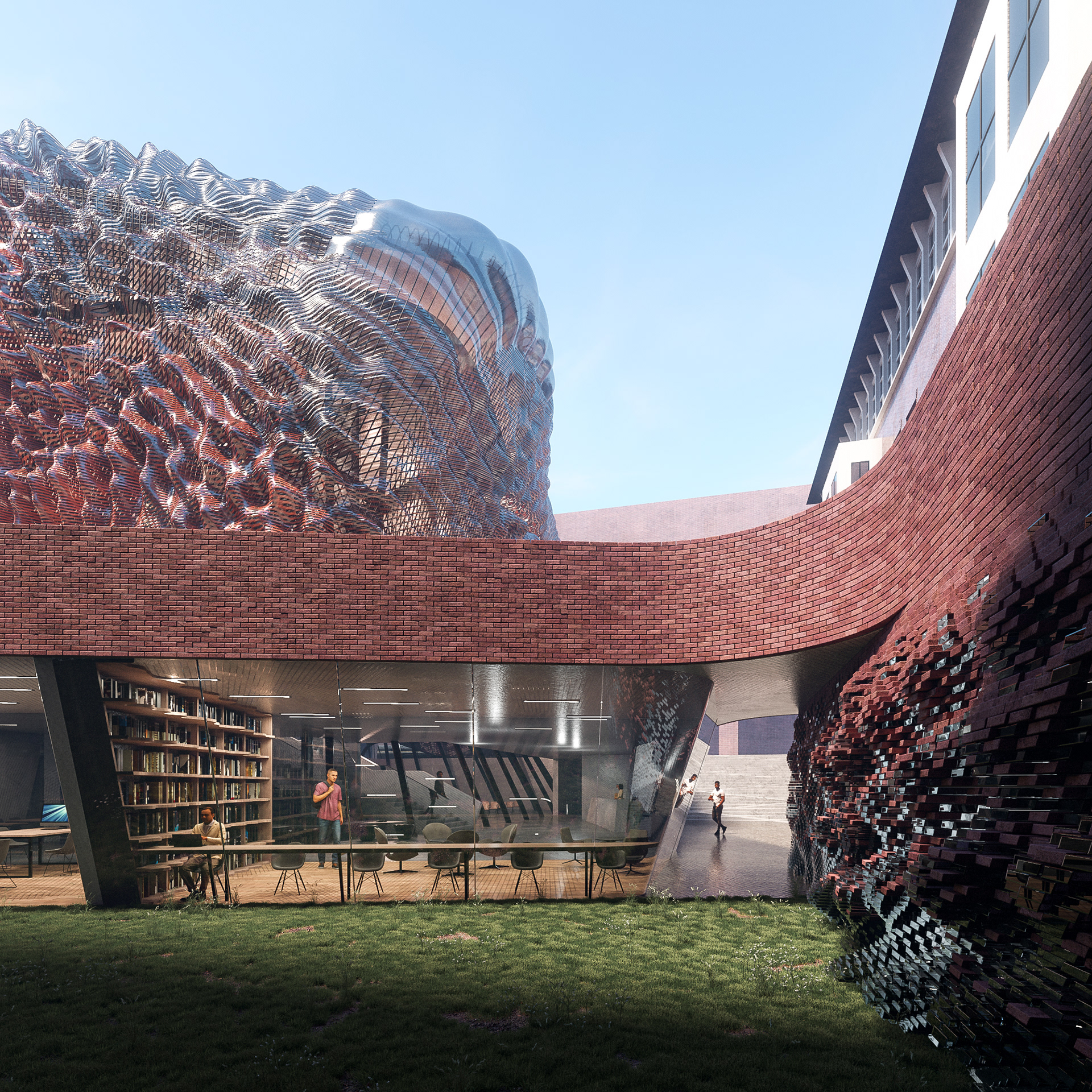
Sunken GARDEN
The Overlapping of New and Old
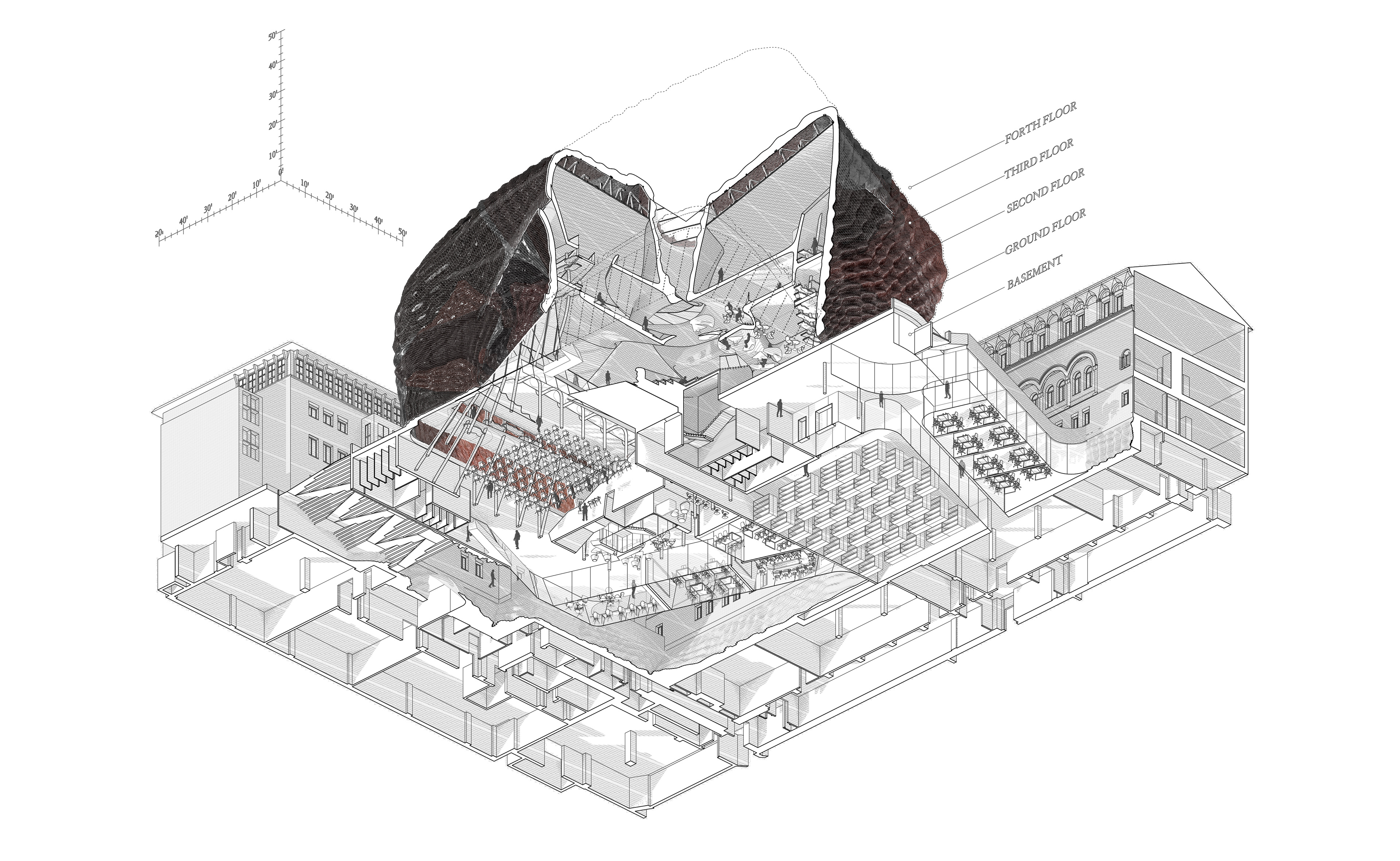
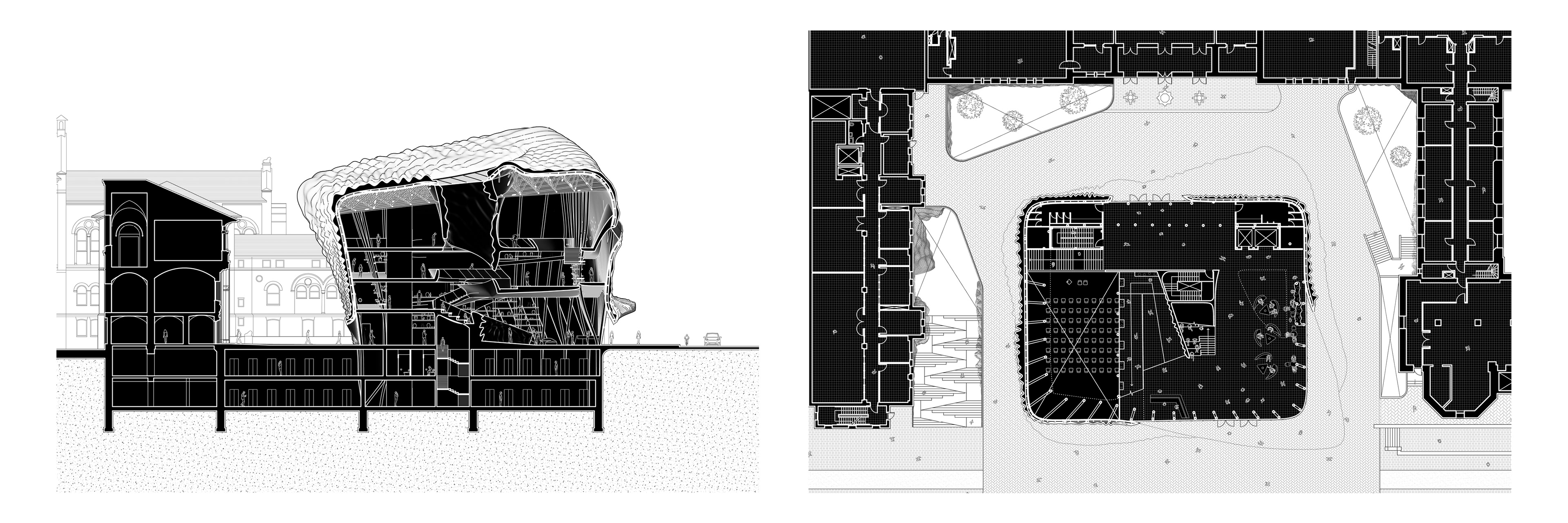
The main building part is erected at the middle of the courtyard of Penn Museum and open towards the street, creating a seamless connection to the walkway. Three sunken gardens provide multi-layer of openess to the courtyard. The underground space covered for years since the museum has been built was re-exposed to the world.
Inspired by the intervention of water waves, the building skin is a re-expression of the overlapping indigenous territories. The translucent ETFE material creates an overlapping visual effect of the skin, structures, and interior spaces. The waving pattern on the new building skin influences the existing old facade at the overlapping realm between the new and the old, creating an undulating brick pattern and a sense of resonance.
Inspired by the intervention of water waves, the building skin is a re-expression of the overlapping indigenous territories. The translucent ETFE material creates an overlapping visual effect of the skin, structures, and interior spaces. The waving pattern on the new building skin influences the existing old facade at the overlapping realm between the new and the old, creating an undulating brick pattern and a sense of resonance.
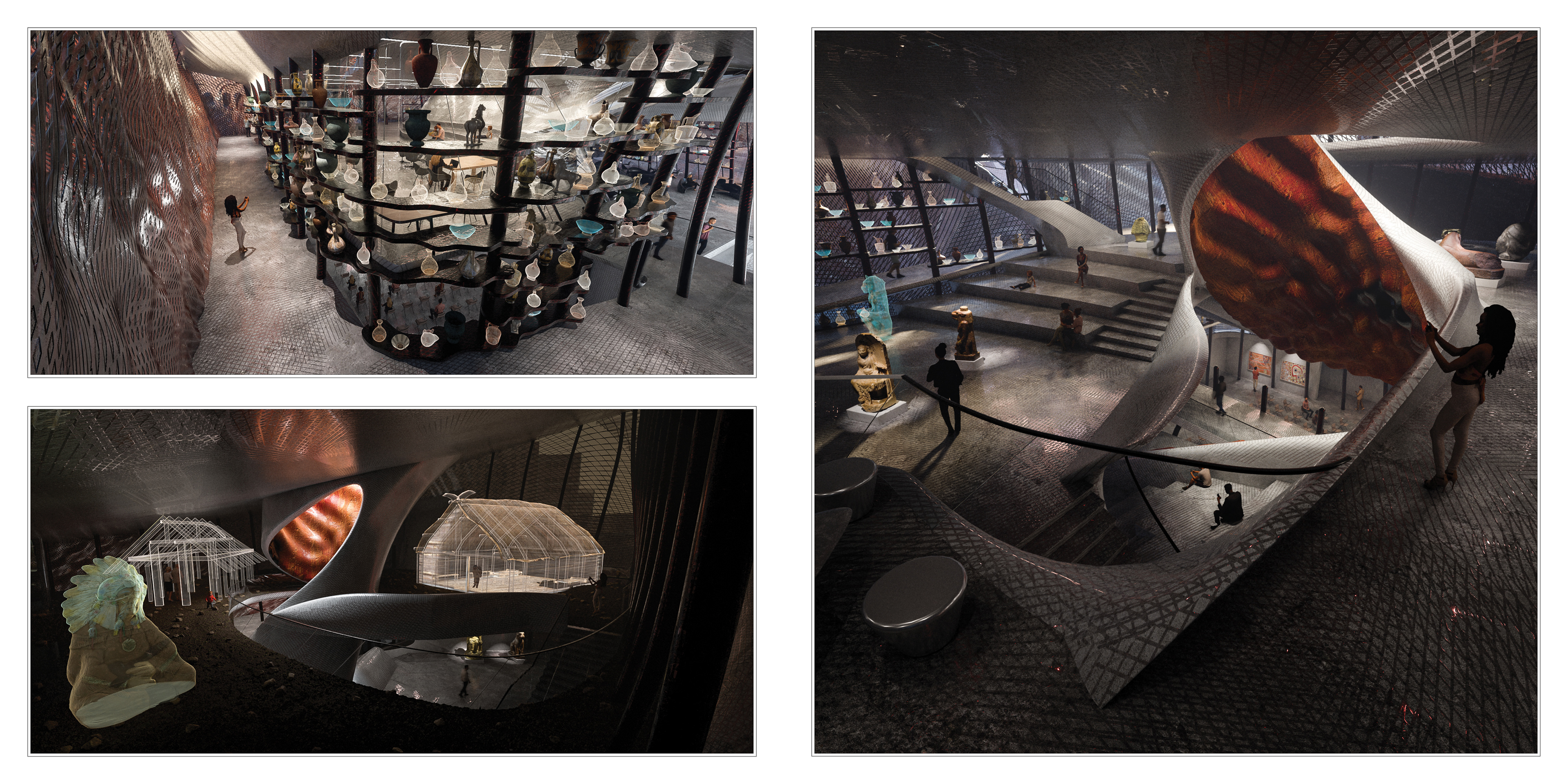
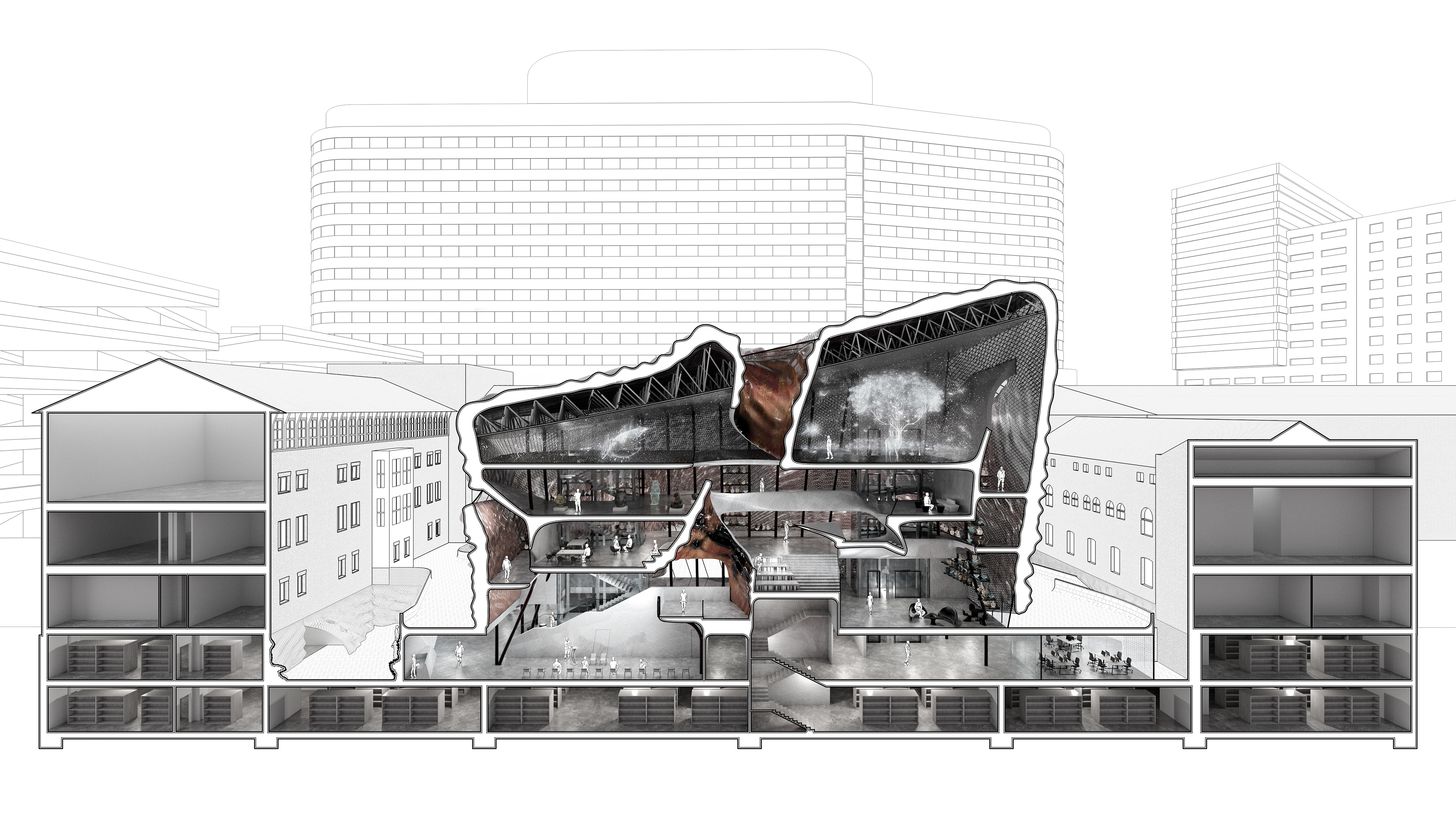
THE structural shelf(LEFT above) / Multi-sensory exhibition hall (LEFT Below) / THE ATRIUM (RIGHT)
The real artifacts are slowly returned, leaving only virtual holographic projections.
The spaces are overlapping: the ramp is used for both circulation and exhibition, providing two types of visit circulation-the fast and slow circulation; boundaries of different spaces are blurred, giving visitors a sensory connection between different spaces.
The functions of the building components are overlapping: stairs are also as seating areas; columns are also as shelves; shelves are used for both archive and exhibition. Artifacts that have been kept in storage for years now have their new place and can be re-exposed to the public.
The functions of the building components are overlapping: stairs are also as seating areas; columns are also as shelves; shelves are used for both archive and exhibition. Artifacts that have been kept in storage for years now have their new place and can be re-exposed to the public.